What the numbers mean
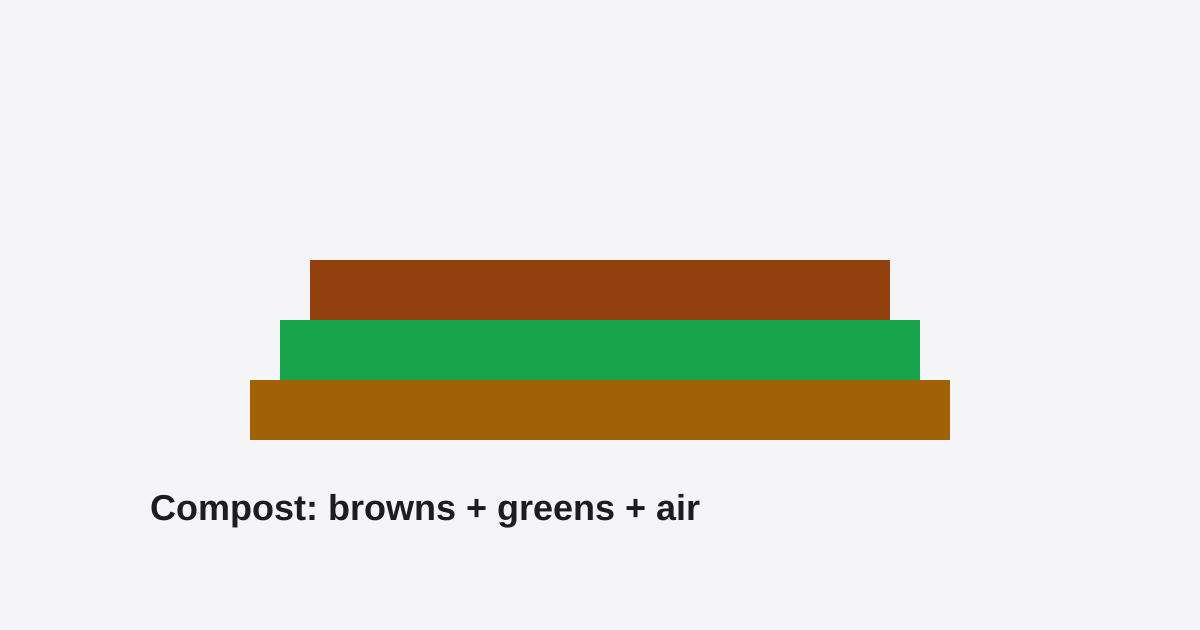
Greens (fresh clippings, kitchen scraps) are nitrogen-rich, around 15:1 C:N. Browns (dry leaves, straw, cardboard) are carbon-rich, around 60:1. A pile near 30:1 C:N heats and breaks down well. By volume, that works out to roughly 2–3 parts browns to 1 part greens — this calculator gives that practical rule, not a false precise formula, because real materials vary.
Keep the pile moist like a wrung sponge, turn it regularly, and avoid meat, dairy and diseased plants in a home pile.
How to use it, step by step
Enter the volume of browns (dry leaves, straw, cardboard) and greens (fresh grass, kitchen scraps) you have. The calculator compares the ratio and suggests whether to add more browns or greens. Aim for about 2–3 parts browns to 1 part greens by volume. Chop material small, keep the pile moist like a wrung-out sponge, and turn it every week or two to add air. A pile that smells bad usually needs more browns and more air, not more greens.
Worked example in detail
If you have 6 buckets of browns and 2 buckets of greens, the ratio is 3:1 — in the target range. If you have 2 buckets of browns and 2 of greens, the ratio is 1:1, which is too green: add about 4 more buckets of browns to reach 3:1. The ratio is by volume, not weight — a bucket of dry leaves weighs far less than a bucket of wet grass, but volume is what you can measure in the garden.
What affects composting speed
Particle size, moisture, air, pile size and temperature all matter. Small pieces break down faster. A pile at least 3 ft in each direction holds heat better than a small pile. Turning adds oxygen, which aerobic microbes need; without it, the pile goes anaerobic and smells. Cold weather slows everything, but does not stop it — a pile that stalls in winter often restarts in spring.
Frequently asked questions
Can I compost meat and dairy?
In a home pile, no — they attract pests and smell, and may not reach temperatures that kill pathogens. Stick to plant material, coffee grounds, eggshells and plain cardboard.
Why does my compost smell?
Usually too many greens, too much water, or too little air. Add dry browns, turn the pile, and stop adding water until it smells earthy again.
How long until compost is ready?
With regular turning, 2–3 months in warm weather is realistic. Without turning, 6–12 months is normal. Finished compost is dark, crumbly and smells like soil, with no recognisable original material.