Formula
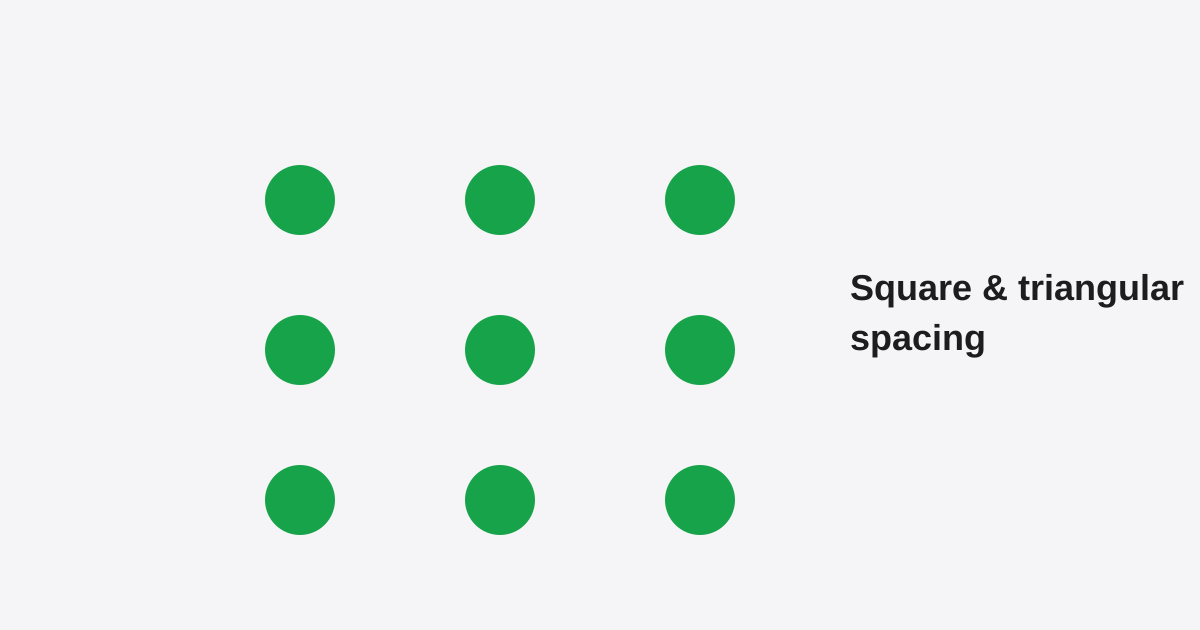
Square: plants = area ÷ (spacing in feet)². Triangular: plants = area ÷ (spacing² × 0.866). Example: 32 sq ft at 12 in spacing, square layout = 32 plants; triangular = about 37.
Notes
Spacing tables vary by variety and by source — use this as a planning number, then check the seed packet or local extension table for your variety. Leave paths for access; a bed you cannot reach will not be harvested.
How to use it, step by step
Enter the bed area in square feet and the spacing in inches from the seed packet or plant label — that spacing is usually the distance between plants in a row and between rows. Choose square spacing for simple rows and triangular (offset) spacing if you want to fit more plants in the same bed. The calculator gives the number of plants; round down, because a plant that does not fit will be crowded out anyway. Leave room for paths at the edges of the bed.
Worked example in detail
A 4 ft by 8 ft bed is 32 square feet. At 12-inch spacing, square layout gives 32 ÷ 1² = 32 plants. Triangular layout divides by 0.866 as well, giving about 37 plants — roughly 15% more, because the offset rows nest together. At 6-inch spacing, the same bed holds 128 plants in square layout. Small changes in spacing make very large differences in plant count, which is why the packet recommendation matters.
What affects the spacing you should actually use
Rich soil and regular watering let plants grow larger, so they may need the full packet spacing or more. Poor soil, shade, or a short season can justify slightly tighter spacing, but only for crops you will harvest young, such as salad leaves. Large plants such as squash and tomatoes need their full space for air circulation; crowding them increases disease even if the calculator says more plants fit.
Frequently asked questions
Is triangular spacing always better?
It fits more plants, but it is harder to weed and harvest in straight rows. For crops you harvest repeatedly, straight square rows are often more practical.
Does spacing mean between plants or between rows?
Seed packets usually give one number that applies to both. If a packet gives separate in-row and between-row spacings, use the larger one as a safe single spacing, or calculate rows separately.
What about edge plants?
Plants at the edge of a bed grow better than the calculator assumes, because they get light from the side. That is a bonus, not a reason to crowd the middle.