Depth by use
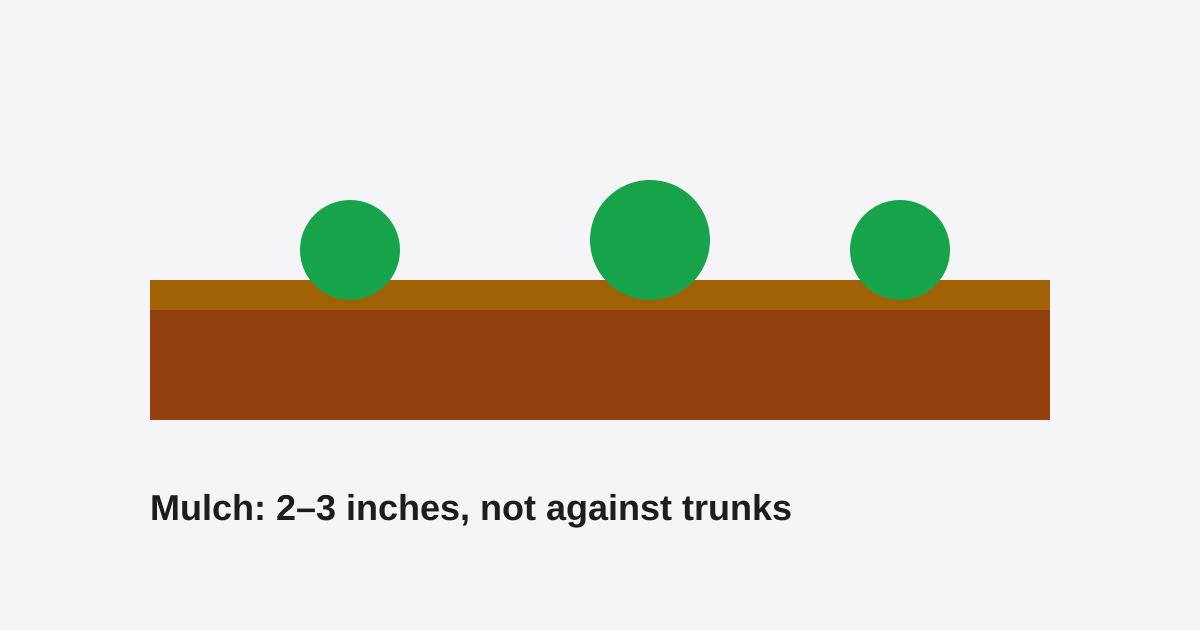
Most garden beds: 2–3 inches. Paths and play areas: 3–4 inches. Newly planted trees: a wide ring, 2–3 inches deep, kept clear of the trunk. More than 4 inches in a planting bed can stay too wet and starve roots of air.
Replenish mulch as it breaks down, usually once a year, and use the mulch calculator to avoid buying far too much or too little.
Depth by situation
For planting beds, 2–3 inches is the sweet spot: enough to suppress weeds and hold moisture, not so much that water cannot reach the soil. For paths and around established shrubs and trees, 3–4 inches lasts longer under foot traffic. For newly planted trees, 2–3 inches over the root zone, kept clear of the trunk, is right. Vegetable beds that are dug over each year need only a seasonal layer, while perennial beds benefit from a maintained layer year-round.
Types of mulch and how they behave
Bark chips last longest and suit paths and shrub beds. Shredded bark knits together and stays put on slopes, but can form a mat that sheds water if it dries out completely. Straw breaks down in a season and suits vegetable beds, where it is dug in at year end. Wood chips from tree work are free in many areas but should be aged before use around young plants, because fresh chips can temporarily tie up nitrogen at the soil surface. Leaves, shredded, make excellent free mulch for perennial beds.
Mistakes to avoid
The most common mistake is the mulch volcano — piling mulch against a trunk or stem. The second is mulching over dry soil: mulch holds moisture in, but it also keeps rain out if the soil underneath is already dry, so water first, then mulch. The third is using dyed or treated wood mulch in vegetable beds, where chemicals have no place. Plain, untreated mulch is the safe choice for food gardens.
Frequently asked questions
When is the best time to mulch?
Spring, after the soil has warmed and been watered, is ideal for most beds. Autumn mulching protects roots over winter, but do it after the soil has cooled, not while it is still warm, or you may keep pests active.
Does mulch attract termites?
Mulch itself does not attract termites more than any other organic matter, but mulch piled against a house wall gives them cover. Keep mulch a few inches away from building foundations.