Formula
Same volume formula as soil: length × width × depth ÷ 12 = cubic feet. At 3 inches, 1 cubic yard (27 cubic feet) covers 108 square feet. Example: 10 ft × 10 ft at 3 in = 25 cubic feet, just under 1 cubic yard.
Common mistakes
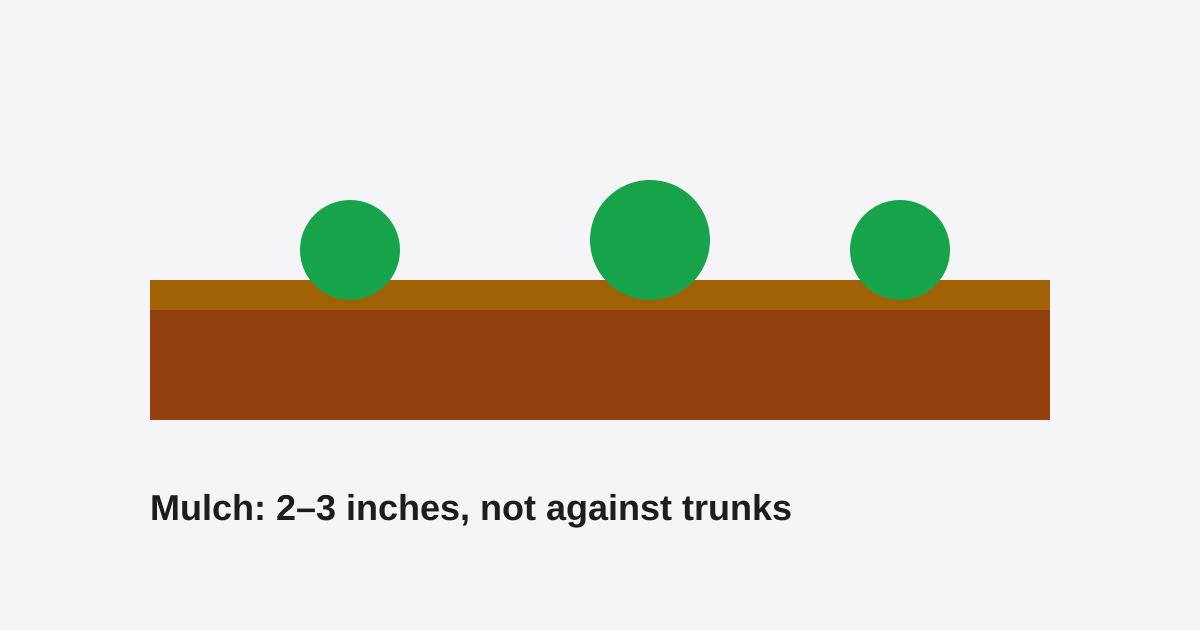
- Mulch volcanoes: do not pile mulch against tree trunks or plant stems — keep it a few inches clear.
- Too deep is also a problem: more than 4 inches can suffocate roots and stay too wet.
How to use it, step by step
Measure the area to be mulched in square feet. For a rectangle, multiply length by width; for an irregular bed, split it into rectangles or estimate generously and round up. Choose a depth: 2–3 inches is right for most planting beds, 3–4 inches for paths and around shrubs. The calculator gives cubic feet and cubic yards, so you can compare bagged and bulk prices directly. Do not mulch right up to trunks and stems — leave a clear gap of a few inches.
Worked example in detail
A bed 10 ft by 6 ft is 60 square feet. At 3 inches deep, volume = 60 × 3 ÷ 12 = 15 cubic feet, or 0.56 cubic yards. At the same depth, 1 cubic yard covers 108 square feet, which is why bulk mulch is the economical choice for larger areas. At 2 inches, the same bed needs only 10 cubic feet; at 4 inches, 20 cubic feet. Depth, not area alone, decides the order.
What affects how long mulch lasts
Fine bark and shredded wood break down faster than coarse bark chips, so they need topping up sooner. Wind, rain and foot traffic thin paths faster than sheltered beds. Mulch under trees disappears into leaf litter and soil life more quickly than mulch on a path. Expect to top up most beds once a year, usually in spring, rather than replacing the whole layer.
Frequently asked questions
Is mulch against a tree trunk really harmful?
Yes. Mulch piled against bark keeps it damp, invites rot and pests, and can girdle a young tree. Keep a clear ring around trunks and stems.
Should I remove old mulch before adding new?
Usually no — just top up to the target depth. Remove old mulch only if it is matted, mouldy, or so thick that water cannot get through.
Does mulch stop all weeds?
No, but a 3-inch layer suppresses most annual weeds by blocking light. Perennial weeds with deep roots will still push through and need pulling.