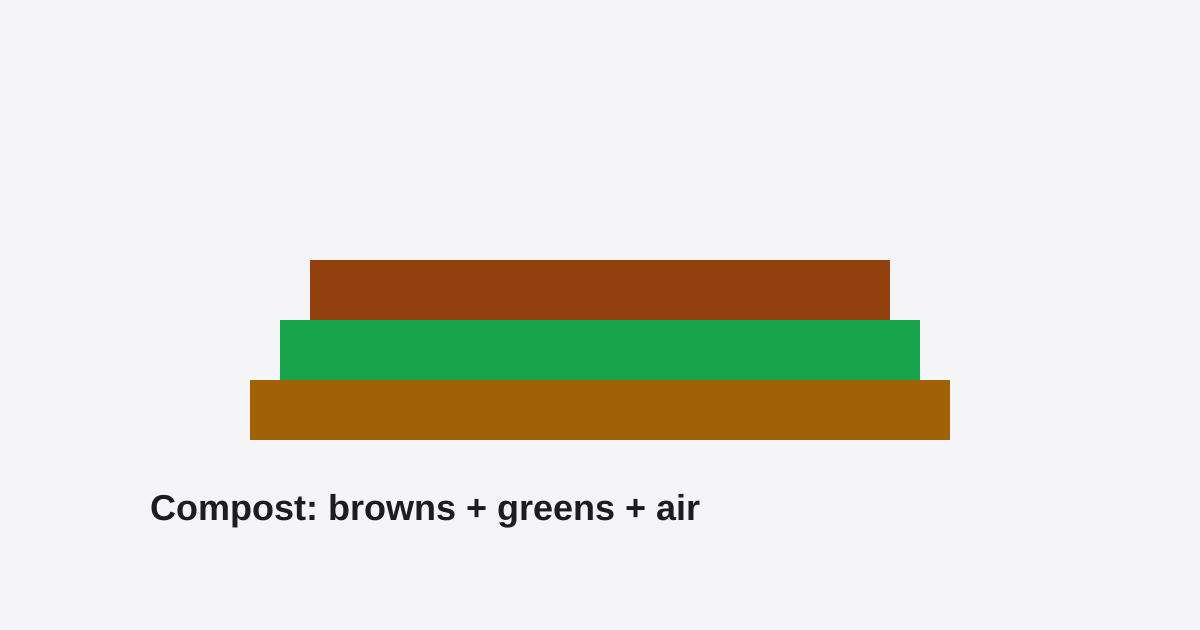
The three things a pile needs
Carbon (browns), nitrogen (greens), and air plus moisture. Without air it smells; without moisture it stalls; without enough nitrogen it stays cold. Turn the pile when the centre cools, and chop materials smaller to speed breakdown. Use the compost ratio calculator for a starting mix.
What goes in, and what stays out
Browns are dry, carbon-rich materials: fallen leaves, straw, shredded cardboard, sawdust from untreated wood. Greens are moist, nitrogen-rich materials: fresh grass clippings, vegetable peelings, coffee grounds, manure from herbivores. Aim for about 2–3 parts browns to 1 part greens by volume. Keep out meat, dairy, oils, diseased plants, weed seeds from invasive species, and treated wood. Eggshells are fine once crushed; citrus and onion are fine in small quantities in a well-managed pile.
Building and maintaining a pile
- Size matters: a pile about 3 ft in each direction holds heat and breaks down faster than a small heap.
- Layer, don't dump: alternate browns and greens, and sprinkle water as you build so the pile is moist throughout.
- Turn regularly: every 1–2 weeks moves material from the cool outside to the hot centre and adds oxygen.
- Cover in heavy rain: a tarp or lid stops the pile becoming waterlogged, while still allowing air in from the sides.
Troubleshooting
A pile that does nothing is usually too dry, too small, or mostly one material. Add water, add more material, and mix browns and greens. A pile that smells like ammonia has too many greens — add browns and turn it. A pile that smells like rot has too little air — turn it and add coarse browns like straw. A pile full of flies usually has exposed food on the surface — bury fresh additions under browns. Use the compost calculator to check your ratio before rebuilding.
Frequently asked questions
Do I need a bin?
No, but a bin keeps a pile tidy, retains heat, and deters pests. An open heap works if you have space and do not mind slower composting.
Can I compost in winter?
Yes, more slowly. Microbial activity drops in cold weather, but the pile restarts in spring. Keep adding material through winter and turn it when you can.